Autoclave Carbon Fiber Manufacturing: Process, Benefits and Limitations
Autoclave manufacturing uses controlled heat and pressure to cure a composite component. For a carbon fiber part, it is one stage in a process that begins with material and tooling decisions and continues through trimming, assembly and inspection.
Understanding that complete process helps buyers evaluate a manufacturing proposal. An autoclave is a useful production capability, but the quality of the finished component also depends on what happens before and after the cure.
What happens inside the autoclave?
In a typical prepreg process, the laminate is laid onto a tool and enclosed in a sealed vacuum bag. The vacuum system removes air from the bagged assembly; the pressurised chamber applies external pressure, while controlled heating supports resin flow and cure. Together, the specified conditions help consolidate the laminate.
The material and processing method must work together. Gurit’s Guide to Composites provides a technical overview of autoclave and other manufacturing routes. For the material itself, see our explanation of carbon fiber prepreg.
The manufacturing process, from tooling to inspection
1. Review the component and prepare the tooling
The production plan starts with the part geometry, interfaces, finish and expected quantities. These requirements inform the tooling arrangement and the later trimming and assembly work.
A tooling review should also address how the part will be released from the mold and where the vacuum bag will seal. Those details are easier to resolve before the tool is manufactured.
2. Cut and place the prepreg plies
The production team prepares the material and lays up the component according to its laminate definition. The work includes the required ply positions, orientations, overlaps and local reinforcements.
For a buyer, the useful distinction is between a shape and a manufacturing definition. A CAD surface describes geometry; the production documentation must also establish how that geometry will be built.
3. Prepare and check the vacuum bag
The bagging arrangement must suit the part, tool and cure process. Seals, connections and bag placement are checked before curing begins. Areas where the material or bag does not follow the tool correctly need attention at this stage.
This is one reason complex geometry should be discussed early. A feature that looks straightforward in CAD may make lay-up or bagging more difficult and increase the work required for repeat production.
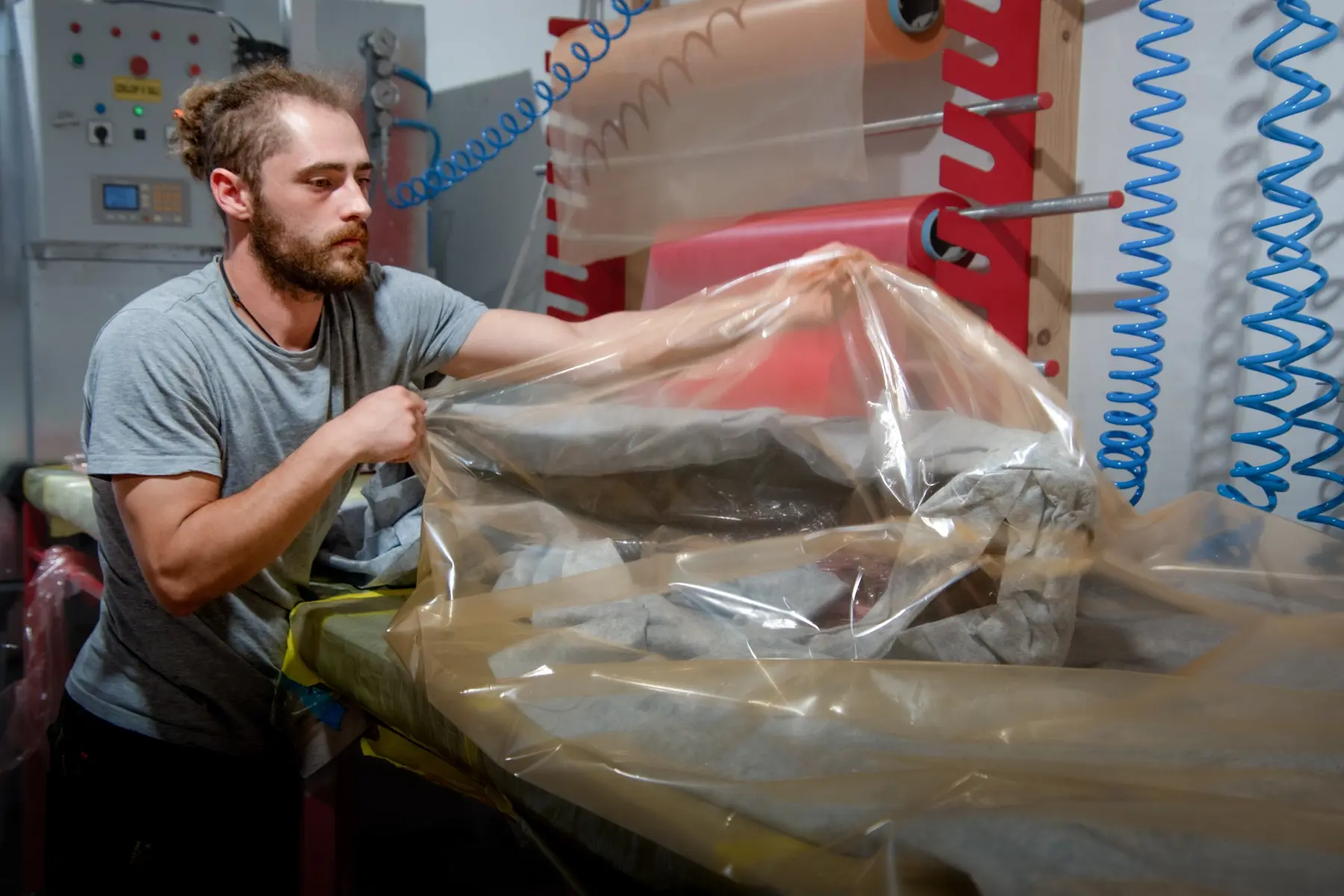
Vacuum-bagging preparation at CCS. The bagging arrangement is prepared around the tooling before the assembly enters the autoclave.
4. Run the specified cure cycle
The assembly is loaded into the autoclave and processed using the defined cycle. Temperature, pressure, time and the vacuum arrangement are set for the selected material and manufacturing method.
A quotation should not rely on a universal cure recipe. If the customer specifies a particular material or process, the manufacturer needs that information before confirming compatibility with its equipment and tooling.
5. Cool, demold and complete the component
After the cycle and the required cooling, the component is removed from its tooling. The remaining work may include trimming, drilling, bonding inserts, fitting brackets and assembly.
A molded part and a ready-to-install assembly are different supply scopes. Confirm which condition is included in the quotation, especially when another supplier will carry out painting or final integration.
6. Inspect against agreed requirements
Acceptance should refer to the project requirements: relevant dimensions, fit, visible surfaces and assembly details. If additional testing or documentation is required, its method, responsibility and cost should be agreed before production.
At Custom Carbon Solutions, visual and dimensional checks form part of our carbon fiber parts manufacturing process. The acceptance criteria are defined around the component and its intended supply condition.
What makes the process repeatable?
Repeatability comes from a defined production method. The material, laminate, tooling and cure requirements need to remain connected to the approved part revision. Trimming and assembly details matter too: a consistently molded shell is only useful if the finished component fits its application.
When moving into recurring batches, ask which sample or drawing establishes the approved configuration, which characteristics will be inspected and how design changes will be introduced.
For example, changing the location of a bonded bracket after approving a sample can affect the assembly fixture and the fit check, even if the outer shell stays the same. The production plan should capture that change.
What are the practical limitations?
Tooling and usable space. The complete assembly must fit the chamber, including the mold, supports, bagging and connections. Part dimensions alone are insufficient for confirming whether a job can be processed.
Cost and scheduling. The proposal needs to account for tooling, preparation, equipment time and the operations after curing. Ask how the requested batch size affects the production plan.
Finish and validation. An autoclave cure does not by itself establish that a part meets every cosmetic, dimensional or structural requirement. The agreed inspection and validation work still applies.
Process suitability. The equipment should match the project. Where an application does not require the proposed manufacturing route, it is reasonable to compare alternatives against the same finished-part requirements.
Autoclave manufacturing at Custom Carbon Solutions
Our manufacturing facility in Ljubljana, Slovenia, includes an autoclave with a chamber diameter of 2,000 mm and a length of 3,000 mm. Usable capacity for an individual project depends on the complete tooling and bagged assembly, so we review geometry before confirming fit.
We support prototypes, small batches and recurring production, with tooling, prepreg lay-up, autoclave curing, trimming, bonding and assembly forming part of the available scope.
Send your CAD model or reference information, expected quantities, intended use and required finish. Discuss an autoclave manufacturing project with our team to establish the next steps. An NDA is available before confidential files are shared.

Leave A Comment