Custom Carbon Fiber Parts: A Practical Guide for Buyers
A successful carbon fiber project starts with a clear description of what the component must do. Its shape matters, but so do its mounting points, operating conditions, surface finish and production quantity. These decisions determine the material, tooling and manufacturing work behind the finished part.
This guide explains what to prepare before requesting custom carbon fiber parts, what influences cost, and how to compare manufacturing proposals on a consistent basis.
When does carbon fiber make sense?
Carbon fiber is worth considering when reducing weight, achieving a particular stiffness, forming complex geometry or creating a visible carbon surface has value for the product. Applications can range from covers and housings to body panels, interior components and engineered assemblies.
The starting point should be the requirement. A decorative cover and a component carrying mechanical loads may look similar but need different design and validation work. Reproducing the shape of a metal part in carbon fiber does not establish that the replacement will perform the same way.
Carbon composites also need appropriate design for their environment. Impact, heat, moisture and UV exposure can affect performance, while contact with aluminium can introduce galvanic corrosion concerns. These considerations are covered in the FAA’s composite engineering guidance. For a buyer, the practical step is to describe the operating conditions early so that material selection and protection can be assessed.
Define the component before choosing the process
You do not need a complete manufacturing specification for an initial discussion. You do need to explain the application and distinguish fixed requirements from details that can still change.
- Function: what the part does, what it supports and how it connects to surrounding components.
- Geometry: CAD files, drawings, scan data, photographs or an existing part, with critical dimensions identified.
- Operating conditions: expected loads, vibration, temperature, outdoor exposure and relevant chemicals.
- Appearance: which surfaces are visible, whether the carbon weave is exposed, and whether painting or clear coating is required.
- Production scope: initial quantity, likely repeat orders and the required delivery window.
If a dimension is essential for assembly, identify it explicitly. A supplier should not have to infer which hole position controls fit or which surface will be visible to the end customer.
What determines the price of a custom carbon fiber part?
The material is one part of the cost. A useful quotation also accounts for the work required to develop, manufacture and finish the component.
| Cost element | What to clarify |
|---|---|
| Design and engineering | Is production geometry available, or does the project need CAD development, reverse engineering or design changes? |
| Tooling | What molds, master models and fixtures are included, and who owns and stores them? |
| Manufacturing | How do part size, geometry, laminate requirements and order quantity affect the proposed process? |
| Secondary operations | Are trimming, holes, inserts, bonding and assembly included? |
| Finish and inspection | What surface condition, dimensional checks and acceptance criteria are included? |
Ask for development and tooling charges to be separated from the recurring part price. A lower unit price is difficult to evaluate if another proposal includes assembly or finishing that the first one excludes.
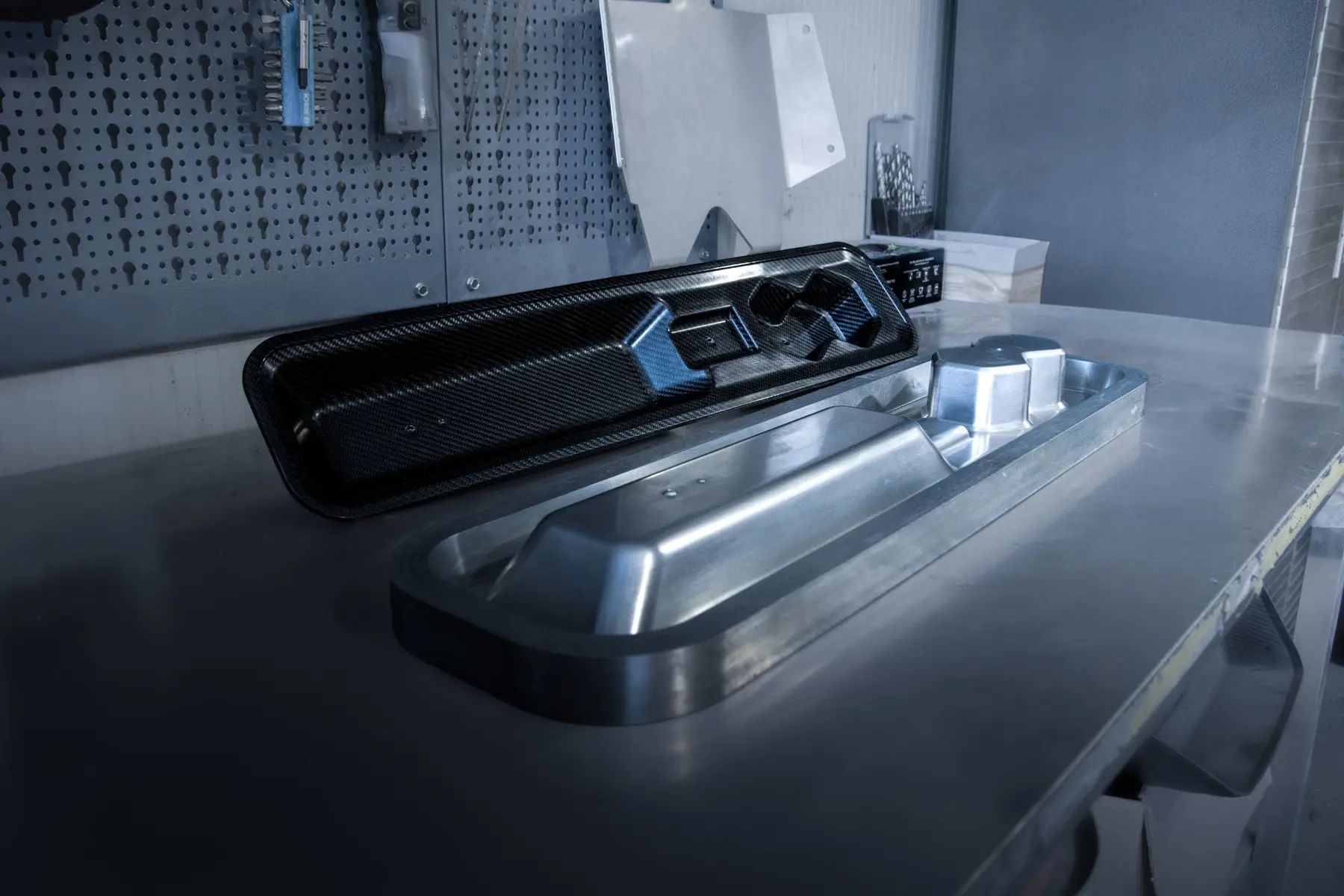
Surface expectations deserve particular attention. A hidden technical component and a clear-coated exterior part can require different levels of cosmetic work even when their basic geometry is similar.
Plan the transition from prototype to repeat production
Define what the first parts need to prove. The immediate goal might be an assembly check, an appearance review or a functional test. The prototype plan should reflect that goal, including any differences from the intended production configuration.
Before a recurring order begins, agree which design revision is approved and how changes will be handled. A revised mounting point can affect more than the part itself: the mold, trimming fixture or assembly sequence may also need adjustment.
If demand is uncertain, share a realistic initial quantity and a separate estimate for later batches. This gives the manufacturer a better basis for proposing tooling than a single optimistic lifetime volume.
Choose the manufacturing approach around the project
A proposal should explain why the selected materials and process suit the application. If prepreg is proposed, our guide to prepreg carbon fiber components explains the main considerations for buyers.
At Custom Carbon Solutions, we manufacture components in Ljubljana, Slovenia, using prepreg and autoclave processing. Our carbon fiber manufacturing capabilities cover design review, tooling, production, trimming, bonding and assembly. The scope can cover the complete component or selected stages of a project.
Agree what an acceptable part looks like
Define acceptance before production begins. Useful criteria include critical dimensions, fit against mating parts, visible surface requirements, edge condition and the position of bonded or mechanical interfaces.
For example, a cover may need to fit accurately around an existing assembly while also meeting an agreed cosmetic standard. A drawing controls the interface; an approved sample can help communicate the expected appearance. Neither should leave the supplier guessing about the other.
Where an application requires structural testing, certification or specific documentation, include those requirements in the enquiry. Their scope should be agreed explicitly, alongside responsibility for design approval and validation.
Prepare an enquiry that can move forward
Send the best information you currently have: geometry or reference images, the intended application, initial quantity, surface requirements and target timing. Highlight the unanswered questions. An early discussion is still useful when a drawing or laminate specification is incomplete.
Discuss your component with our team. We will review the available information and identify the next steps for tooling and manufacturing. An NDA is available before confidential project files are shared.

Leave A Comment