Prepreg Carbon Fiber Parts: Benefits, Limitations and Manufacturing
Prepreg carbon fiber combines reinforcement and a controlled quantity of resin before the material reaches the component manufacturer. It gives the production team a defined starting material for building a laminate, but the finished part still depends on the design, ply placement, tooling and curing process.
For a buyer, the useful question is how prepreg supports the requirements of a particular component. This guide explains the material, the decisions it brings into production and the trade-offs to discuss before placing an order.
What is carbon fiber prepreg?
Prepreg is reinforcement supplied already impregnated with resin. Carbon fiber forms include woven fabrics and unidirectional reinforcement. The material supplier defines the resin system, reinforcement and processing requirements. This article focuses on thermoset prepregs, such as carbon/epoxy, which are cured to form the finished laminate.
At Custom Carbon Solutions, we use prepreg to manufacture components. The material supplier makes the prepreg; our work turns it into a shaped, trimmed and assembled part.
What does prepreg help control?
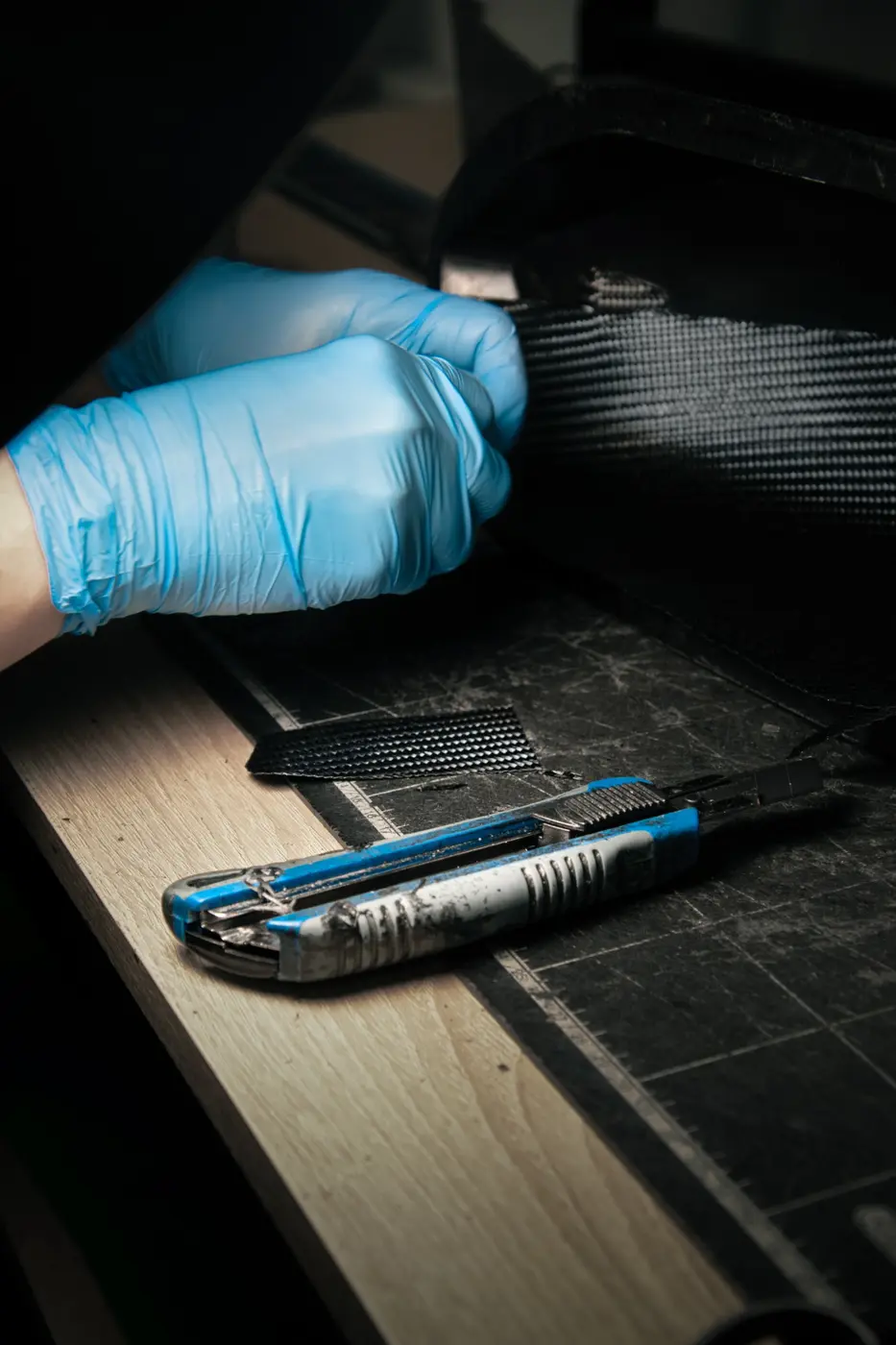
Pre-impregnation gives the manufacturer a specified material composition. Layers are then cut and placed to form the component. This provides a basis for documenting which material goes where and repeating the intended laminate in later batches.
That repeatability matters when a project moves beyond its first sample. The discussion can refer to a defined material and laminate rather than an appearance alone.
For buyers, three decisions deserve attention:
- Material selection: which reinforcement and resin system are proposed for the application?
- Laminate definition: what thickness, orientation and local reinforcement are required?
- Process control: how will preparation, lay-up and curing follow the agreed manufacturing specification?
The visible weave is only part of the specification
A surface photograph can communicate the desired appearance, but it does not define the construction beneath it. Two components with the same visible weave can have different internal lay-ups and functional requirements.
Separate the cosmetic brief from the engineering brief. Identify the faces that will be seen, how the part is mounted and which areas carry loads. If a component will be painted, say so at the start; the manufacturing discussion should reflect the final surface condition.
This is particularly useful for parts combining a visible outer surface with bonded brackets or inserts. The appearance of one side does not describe everything the assembly must do.
From prepreg to a finished component
For a custom manufacturing project, the process involves more than laying material into a mold:
- Review the part. Establish the geometry, mounting interfaces, production quantity and required finish.
- Define tooling and laminate. Agree the mold arrangement and the material placement needed for the component.
- Prepare and lay up. Cut the material and position the plies, including local details specified for the part.
- Bag and cure. Prepare the lay-up for the curing process selected for the material and component.
- Complete the part. Demold, trim, drill, bond and assemble as required, then inspect against the agreed criteria.
These stages form our composite manufacturing process. A project may need the complete sequence or support at selected stages.
Does every prepreg require an autoclave?
No. Some systems are designed for autoclave processing; others are intended for out-of-autoclave curing. The material specification determines which route is appropriate. Gurit’s Guide to Composites describes both approaches.
At CCS, prepreg and autoclave processing are central to our manufacturing capability. Our separate guide to the autoclave curing process explains the roles of heat, pressure and preparation.
What are the limitations?
Prepreg comes with material-specific storage, handling and processing requirements. Shelf life, usable time outside controlled storage and the cure schedule must come from the applicable supplier documentation. A generic temperature or storage period should not be used as a specification for every prepreg.
It also brings practical questions for the quotation. Does the available material suit the part? Can the tooling support the proposed process? How much manual lay-up and finishing will the geometry require? How does the order fit into production scheduling?
Prepreg is not a promise of a flawless cosmetic surface or a finished component straight from the mold. Surface preparation, coating and secondary operations may still be required. These should be included in the agreed supply scope.
Prepreg, infusion or wet lay-up: how should a buyer compare them?
Ask suppliers to compare the same finished component and acceptance requirements. A raw laminate price alone does not capture tooling, labour, inspection, finishing or assembly.
| Approach | How resin is introduced | Question to ask |
|---|---|---|
| Prepreg | The reinforcement arrives pre-impregnated. | Which material and curing route are specified? |
| Resin infusion | Resin is drawn through dry reinforcement in a sealed setup. | How does the proposed infusion arrangement suit this geometry? |
| Wet lay-up | Resin is applied to the reinforcement during lay-up. | What controls and finishing work are included for the required result? |
The appropriate choice depends on the application, geometry, volume and required performance. The comparison should also reflect the manufacturer’s demonstrated experience with that process.
What should you send for a prepreg component enquiry?
Share the part geometry, application, quantity and surface requirements. If you already have a material specification or laminate schedule, include it. If you are still evaluating materials, explain the intended use and the requirements that matter most.
Our practical guide to ordering custom carbon fiber parts covers the information needed for a useful manufacturing quotation.
Send your component requirements to our team to discuss prepreg manufacturing in Ljubljana, Slovenia. An NDA is available before confidential information is shared.

Leave A Comment